(long live the great technical-scientific revolution!)
[http://issuu.com/publishersoffice/docs/imperial/1?mode=a_p]
giovedì 25 agosto 2011
IMPERIAL 3- whileaway
In downtown Los Angeles, early sunlight often warms the west side of the tall white canyon called Flower Street. Beneath a lush awning of tree-leaves against the scaffolded coast of the University Club, a bus blinks its red lights. The shadow of one skyscraper upon another seems as ancient as any survivor of geologic or even celestial time. But bit by bit, the shadow shrinks and thins; the yellow-tan glow takes over, brightening all the while; and Flower Street becomes busy with people and cars.
… And she spun me along Mulholland Drive, winding down across Stone Canyon and around the moist green hills with the San Fernando Valley below; white houses, the more expensive the more precious, then came dark trees and more white building-squares and mountains until the San Fernando Valley opened up, with the long straight ribbon called Sepulveda shooting through the white-and-grey-green grid toward the mountains.
In San Diego it is a cool summer day in December, palm trees whipping in the sea breeze, crisp shadows, blue sky. An American flag flies from atop an old hotel. Banana leaves wave above parking lots of littering cars. I see a billboard for Mel Gibson’s new movie “Apocalypto,” and an advertising blimp hovers over so many cars that the farthest ones are washed out by distance. The skyscrapers of San Diego’s core huddle compactly amidst the sprawl. The freeways are lush with ivy, ice plants and palm trees. This lively coast remains verdant between and among the concretions of humanity. But just outside the city we find this verdancy to be actually a human artifact; for the hills, though bushy, are semi-arid, the dirt tan or even white, showing through between grass-clumps like bald patches in a worn carpet.
LA Theory reloaded, exegesis-like
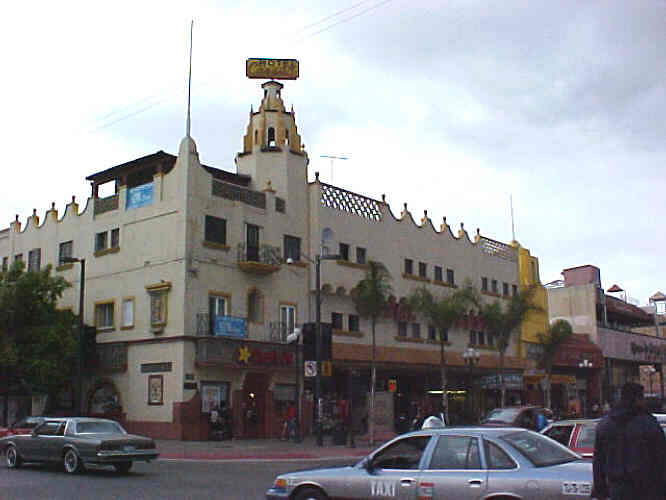
a. The LA Theory is logically and structurally connected to the theory of Tijuana- a little like the hidden face of the planet of the apes is connected with apes triumphant, or like the sublime, cold and impassionate Law is united to its monstrous supplement of naked fury. Besides, LA is monstrous its part (in all of the four 'ecologies' Reynert Banham described)- just see the chapter on 'California noir' in Mike Davis' book on THE CITY, as Edward Soja called it.
b. See later "TIJUANA 2: Michael Hemmingson's "ZONA NORTE" [2008, 215 pp]", and "TIJUANA 3: JJ-180 [Philip K. Dick , "Now wait for last year"]", with its Italian double- and the approach to its background (anthropological, not just geographical) with 'Imperial': 1, 2, and to follow. Is this going to project me into space, like some P.K. Dick hero from 'The time is out of joint' (which Vollmann puts into his monumental bibliography)-or just towards more homely time shifts in between aliens, like Dr. Eric Sweetscent in Tijuana proper?
c. VALIS (Vast Acting Living Intelligent System), the great epic of this portion of the earth surface, showed it: Santa Ana, CA, opens up into a million dimensions and a million suns (many of these dimensions being utterly drab and devoid of meaning- the suns black, or gray). It is very doubtful that here we can hold either to the pleasure or to the reality principle: things are a little more complicated, real life (whatever it means) is not like this.
[S. Žižek, "The Matrix, or, the Two Sides of Perversion", 1999, http://lacan.com/zizek-matrix.htm]
BERGAMO: Seminari sull’Antropologia e l’Epistemologia delle discipline Psichiatriche: considerazioni teoriche e prassiche
UNIVERSITÀ DEGLI STUDI DI BERGAMO
Facoltà di Scienze della Formazione
DIPARTIMENTO DI SCIENZE DELLA PERSONA
Scuola di Dottorato in Antropologia ed Epistemologia della Complessità
La psichiatria come scienza e come prassi, si genera come una specifica disciplina medica rivolta a occuparsi della sofferenza e della salute mentale. Nel corso della lunga storia della medicina occidentale, ha ricavato i suoi fondamenti epistemologici, il suo proprio spazio operativo e il suo proprio oggetto, contrastando sostanzialmente gli assolutismi tipici delle concezioni magico-religiose, nonché le riduttive e semplificate rappresentazioni organicistiche. Da sempre chiamata a interrogarsi sia sul suo statuto di scienza che di pratica terapeutica, ha talvolta ritenuto deboli i suoi fondamenti epistemologici, riconoscendoli come non adeguatamente definiti e delimitati, finendo per assumere difensivamente, visioni dogmatiche e deleterie derive ideologiche. Quando invece questa supposta debolezza è stata interpretata piuttosto che come un limite come un’occasione e un’opportunità, le discipline psichiatriche hanno potuto attingere creativamente da molteplici ambiti disciplinari e del sapere, dalla filosofia, dall’antropologia, dalla biologia, dalle neuro-scienze, dalla linguistica, dall’etologia, dall’etica e persino dall’estetica, declinandosi in questo caso come una vera e propria disciplina “complessa”, mostrando tutta la fecondità e la ricchezza che può derivare dalle connessioni dei diversi ambiti del sapere. L’idea di questo ciclo di seminari (con l’ipotesi di poter magari costituire una sorta di seminario permanente sull’antropologia e l’epistemologia delle discipline psichiatriche, con particolare attenzione alle pratiche dei Servizi di Salute Mentale), nasce proprio dal tentativo di rilanciare quest’orizzonte della complessità, sollecitare e stimolare una proficua riflessione sulle premesse teoriche attualmente prevalenti, nonché sulle ricadute che esse hanno riguardo l’organizzazione e l’operatività dei Servizi.
PROGRAMMA:
Prima giornata. 23 settembre 2011 ore 14-18:
Professor Mario Galzigna, docente di Etnopsichiatria e Psichiatria clinica, epistemologia e storia presso l’Università Ca’ Foscari di Venezia.
“Oltre il riduzionismo: per un’epistemologia della psichiatria.”
Seconda giornata. 7 ottobre 2011 ore 9-13, 30:
Professor Pietro Barbetta, docente di teorie psicodinamiche presso l’Università degli studi di Bergamo.
“La questione della diagnosi in psichiatria.”
Terza giornata. 4 novembre 2011 ore 9-13,30:
Professor Alessandro Ricci, docente di psichiatria sociale presso l’Università degli studi di Verona.
“La medicalizzazione e la psichiatrizzazione del disagio.”
Quarta giornata. 25 novembre 2011 ore 9-13,30:
Dottor Giovanni Pezzani, direttore DSM Treviglio - Dottoressa Monica Moioli.
“Il mercato delle pulci”: quale formazione per la Salute Mentale?
Quinta giornata. 16 dicembre 2011 ore 9-13,30:
Dottoressa Beatrice Catini - Dottor Maurizio Salvetti. Associazione LiberaMente, Iniziative Culturali per la Salute Mentale, Lovere (Bergamo).
“La presa in carico collettiva della Salute mentale. Un progetto per la reale inclusione sociale dei pazienti psichiatrici, una riflessione sulle buone pratiche”. Proiezione del documentario “Orizzonte del Mare”
Sesta giornata 13 gennaio 2012 ore 9-13,30:
Professor Paolo Benini, docente di Scienze della società e del Servizio sociale presso l’Università Cà Foscari di Venezia.
“Psicologia sociale e psichiatria. Quale psicologia, quale sociale e quale salute mentale: alcune riflessioni sul lavoro, le pratiche, la mission degli operatori sul Territorio; metodi, obiettivi, risultati.”
Settima giornata. 3 febbraio 2012 ore 9-13,30:
Professor Michele Capararo, docente di Psicologia delle età della vita presso l’Università Cà Foscari di Venezia.
“Riflessioni sulle attuali concezioni del Bios e le ricadute sulle discipline mediche e psichiatriche.”
Ottava giornata. 24 febbraio 2012 ore 9-13,30:
Dottoressa Andrèe Bella, Psicologa, Psicoterapeuta, Associazione Eupsichia.
“Genealogia del disturbo borderline di personalità: un tentativo di analisi della medicalizzazione delle condotte impulsive e dei problemi di autoregolazione nelle odierne ‘istituzioni del sé’ .”
Nona giornata. 9 marzo 2012 ore 9-13,30:
Dottoressa Maria Clotilde Gislon, Direttore scientifico e didattico ISERDIP Milano.
“Il modello bio-psico-sociale secondo l’interpretazione del Professor Carlo Zapparoli e la sua applicazione nei percorsi di cura dei pazienti psicotici.”
Ogni giornata, della durata di circa quattro ore, prevede l’intervento del relatore e un successivo dibattito con i partecipanti.
I seminari si terranno presso la sede dell’Università degli Studi di Bergamo, Piazza Sant’Agostino, Aula 6. Verrà rilasciato l’attestato di partecipazione.
Referenti:
Professor Pietro Barbetta Dottor Giulio De Nicola (denicolagiulio@alice.it)
SEDE UNIV. Di S.Agostino 2-24129 Bergamo
tel 035 2052 924 www.unibg.it
mercoledì 24 agosto 2011
TIJUANA 3/ita: JJ-180 [PK Dick, "Illusione di potere"]
Capitolo 14
Tijuana, di notte
Eric camminava senza meta, E strisciando i piedi. Si lasciava alle spalle, una dopo l’altra, le insegne al neon delle botteguzze strette come cabine, tendeva l’orecchio ai richiami degli spacciatori messicani di droghe, e si godeva come sempre l’incessante fluire e l’ininterrotto risuonare di clacson di vetture private e di taxi automatici. C’erano pure delle antiche auto a turbina fabbricate negli Stati Uniti e trasportate chissà come, decrepite com’erano, di qua dal confine.
— Una ragazza, signore? — Un bambino di non più di undici anni afferrò Eric per la manica e ci si appese, costringendolo a fermarsi.
— Mia sorella. Sette anni, e non è mai stata con un uomo in vita sua. Glielo giuro davanti a Dio, lei sarebbe assolutamente il primo.
— Quanto? — chiese Eric.
— Dieci dollari più il prezzo della camera: in nome di Dio, deve esserci una camera. Il marciapiede trasforma l’amore in qualcosa di sordido: lei non può mettersi a farlo qui e poi sentire ancora rispetto per sé.
— Le tue parole sono sagge — ammise Eric. Ma continuò per la sua strada.
Nelle ore notturne, per antica consuetudine, non si vedevano in giro i venditori ambulanti androidi i loro enormi e inutili tappeti e cesti intrecciati a macchina, e coi carretti pieni di involtini e pasticci di peperoni: la popolazione diurna di Tijuana scompariva insieme con i turisti americani di mezza età per lasciar posto a quella notturna.
I passanti, che camminavano più in fretta di Eric, continuavano a superarlo. Una ragazza con gonna e maglietta attillatissime lo sfiorò... come se (pensò Eric), una relazione durevole legasse le nostre vite, e questo improvviso scambio di calore attraverso un contatto corporeo rappresentasse la più profonda comunione possibile tra noi due. La ragazza passò oltre e scomparve. Alcuni ragazzotti messicani, piccoli e tozzi, che indossavano giubbotti di pelliccia aperti sul collo, puntarono direttamente verso Eric, con la bocca spalancata come se fossero sul punto di soffocare. Eric si affrettò a spostarsi, per non doversi trovare sul loro cammino.
Pensava: “In una città dove tutto è legale e nulla acquista un vero valore si è come riportati indietro nell’infanzia, collocati in mezzo ai cubetti per costruzioni e ai giocattoli, con l’intero universo a portata di mano. Il prezzo di tale evasione è alto: consiste in una rinuncia alla maturità”. E tuttavia Eric amava tale evasione. Quel rumoreggiare, quell’agitarsi significavano vita autentica. Alcuni potevano giudicare ciò malvagio, ma Eric no. Chi pensava così si sbagliava. Quelle bande di ragazzetti, per esempio, che vagavano senza sosta alla ricerca di qualcosa che essi ignoravano e che forse Dio solo sapeva: la forza che li spingeva era il genuino impulso del protoplasma primordiale. Una volta quel moto frenetico e incessante aveva condotto la vita dal mare sulla terra: divenuti ora creature di terra, continuavano ugualmente a girovagare, su per una strada e giù per l’altra. Ed Eric si mescolava in mezzo a loro.
Più avanti c’era un gabinetto di tatuaggio, moderno ed efficiente, illuminato da una parete risplendente. Il padrone, all’interno, lavorava con un ago elettrico che non perforava la pelle, ma la sfiorava incidendo un disegno a tratto continuo. Perché no?, si chiese Eric. Che cosa mi posso far tatuare? Quale motto o immagine potrebbe essermi di conforto in questo periodo così gravido di minacce, in questo momento in cui attendiamo che i lilistariani arrivino per impossessarsi della Terra? Impotenti e atterriti come siamo, diventiamo tutti quanti dei pusillanimi.
Eric entrò nel salone e si sedette. — Può scrivermi sul petto qualcosa come... — Esitò, pensando alla frase più idonea. Il padrone continuò il suo lavoro su un nerboruto soldato delle NU che teneva lo sguardo fisso nel vuoto. — Voglio un disegno — decise Eric.
— Guardi i campioni.
Eric sfogliò a casaccio l’album. C’era una donna con quattro mammelle, in ciascuna delle quali si leggeva un’intera frase. Non andava bene: Eric girò pagina. Un’astronave con lingue di fuoco che uscivano dalla coda. No: gli ricordava il suo duplicato del 2056, che egli aveva deluso. Gli venne in mente una frase: “Sto dalla
parte dei reeg”. Mi farò tatuare questa, a uso degli agenti di Lilistar. Così non dovrò prendere ulteriori decisioni.
— Si è deciso, lei? — chiese il padrone della bottega, che aveva finito col soldato.
— Voglio che mi scriva sul petto: Kathy è morta. Okay? Quanto costa?
— “Kathy è morta” — ripeté l’uomo. — Morta di cosa?
— Sindrome di Korsakow.
— Devo mettere anche questo? Kathy è morta di... come si scrive? — L’uomo prese penna e carta. — Non vorrei sbagliare.
— Dove posso trovare delle droghe da queste parti? — chiese Eric. — Droghe vere, capisce?
— Nella farmacia qui di fronte. Sono la loro specialità, amico.
Eric uscì dalla bottega e attraversò la strada, dove il traffico formava quasi un muro impenetrabile. La farmacia era arredata all’antica: nella vetrina spiccavano modelli di piedi deformi, contenitivi per ernia, bottiglie di colonia. Eric aprì la porta, che si azionava a mano, e si diresse al banco.
— Sì, signore? — disse un uomo con capelli grigi e aria professionale, che indossava un camice bianco.
Eric tese una banconota da cinquanta dollari USA. — JJ-180. Tre o quattro capsule.
— Cento dollari.
Che ladri!, pensò Eric. Aggiunse due banconote da venti e due da cinque. Il farmacista scomparve nel retro, tornando poi con una boccetta di vetro che depose davanti a Eric; quindi raccolse le banconote e le ripose nell’antiquato registratore di cassa, battendo l’importo. — Grazie — disse Eric. Prese la boccetta e uscì dalla farmacia.
Camminò più o meno a casaccio fino a quando ritrovò il Caesar Hotel. Entrò. L’impiegato sembrava lo stesso che lo aveva accolto quello stesso giorno quando era andato lì con Deg Dal Il. Questo giorno, pensò Eric, è durato anni.
— Ricorda il reeg con cui sono venuto? — chiese all’impiegato. Questi lo guardò senza rispondere.
— È ancora qui? — continuò Eric. — È vero che è stato fatto a pezzi da Corning, il sicario lilistariano di questa zona? Mi mostri la stanza. Voglio quella che ho già preso.
— Pagamento anticipato, signore.
Eric pagò e ricevette la chiave. Salì in ascensore, quindi percorse il corridoio deserto, e arrivato alla porta della stanza l’aprì e fece un passo all’interno cercando l’interruttore.
La stanza si illuminò, ed Eric vide che non c’era più alcuna traccia del reeg. La stanza era vuota, come se Deg fosse scomparso... o comunque partito. Eric riconobbe che il poveraccio aveva avuto ragione chiedendogli di essere riportato al campo di concentramento: aveva sempre saputo che la cosa sarebbe finita in quel modo.
Eric si accorse che la stanza lo riempiva di orrore. Aprì la boccetta, tolse una delle capsule di JJ-180, l’appoggiò al tavolino da toilette, e con una moneta la divise in tre parti. Ne inghiotti una, bevendo un po’ dell’acqua contenuta nella brocca; poi si affacciò alla finestra, per guardar fuori durante l’attesa.
-"droga", pp. 131-136 in Antonio Caronia e Domenico Gallo "La macchina della paranoia. Enciclopedia dickiana", AGENZIA X, 2006 CREATIVE COMMONS [http://www.agenziax.it/imgProdotti/4D.pdf]
TIJUANA 3: JJ-180 [Philip K. Dick , "Now wait for last year"]
FOURTEEN Nighttime in Tijuana.
He walked aimlessly, scuffing the pavement, passing one after another the neon signs of the narrow boothlike shops, listening to the clamor of the Mexican hucksters and enjoying as he always did the steady motion and ceaseless, nervous honking of wheels and autonomic cabs and old-time turbine surface cars made in the USA, which somehow, in their last decrepitude, had been brought across the border. 'Girl, mister?' A boy no older than eleven seized Eric by the sleeve and hung on, dragging him to a stop. 'My sister, only seven, and never lay with a man in her life; I guarantee before God, you be assuredly first.' 'How much?' Eric asked. 'Ten dollars plus the cost of the room; there must be in name of God a room. The sidewalk makes love into something sordid; you cannot do it here and respect yourself after.' 'There's wisdom in that,' Eric agreed. But he continued on anyhow. At night the robant peddlars and their enormous, useless, machine-made rugs and baskets, their carts of tamales, customarily vanished; the daytime people of Tijuana disappeared along with the middle-aged American tourists to make way for the night people. Men, hurrying, pushed past him; a girl wearing a crushingly tight skirt and sweater squeezed past him, pressing momentarily against him ... as if, he thought, we had some durable relationship penetrating our two lives and this sudden heat exchange through body contact expressed the deepest possible understanding between the two of us. The girl went on, disappeared. Small tough Mexicans, youths wearing open-throated fur shirts, strode directly at him, their mouths agape as if they were strangling. He carefully stepped from their path. In a town where everything is legal, he thought, and nothing achieves worth, you are wrenched back into childhood. Placed among your blocks and toys, with all your universe within grasp. The price for license is high: it consists of a forfeit of adulthood. And yet he loved it here. The noise and stirrings represented authentic life. Some people found all this evil; he did not. People who thought that were wrong. The restless, roving banks of males who sought God knew what- they themselves didn't know: their striving was the genuine primal under-urge of protoplasmic material itself. This irritable ceaseless motion had once carried life right out of the sea and onto land; creatures of the land now, they still roamed on, up one street and down another. And he went along with them. Ahead, a tattoo parlor, modern and efficient, lit by a wall of glowing energy, the proprietor inside with his electric needle that did not touch the skin, only brushed near it as it wove a cat's cradle of design. How about that? Eric asked himself. What could I have etched on me, what motto or picture which would give me comfort in these unusual times of duress? In times when we wait for the 'Starmen to appear and take over. Helpless and frightened, all of us become essentially unmanly. Entering the tattoo parlor, he seated himself and said, 'Can you write on my chest something like- ' He pondered. The proprietor continued with his previous customer, a beefy UN soldier who stared sightlessly ahead. 'I want a picture,' Eric decided. 'Look through the book.' Huge sample-caselike ledger passed to him; he opened at random. Woman with four breasts; each spoke a complete sentence. Not quite it; he turned the page. Rocketship with puffs belching from its tail. No. Reminded him of his 2056 self whom he had failed. I am for the reegs, he decided. Tattoo that on me so the 'Star MPs can find it. And I won't have to make further decisions. Self-pity, he thought. Or is there such a thing as self-compassion? Not much mentioned, anyhow. 'Made up your mind, buddy?' the proprietor asked him, now finished. Eric said, 'I want you to write on my chest, "Kathy is dead." Okay? How much will that cost?' '"Kathy is dead,"' the proprietor said. 'Dead of what?' 'Korsakow's syndrome.' 'You want me to put that too? Kathy is dead from - how you spell it?' The proprietor got pen and paper. 'I want it to be right.' 'Where around here,' Eric said, 'can I find drugs? You know, real drugs?' 'Across the street at the pharmacy. Their specialty, creaker.' He left the tattoo parlor, crossed against the seething, massive organism of traffic. The pharmacy looked old-fashioned, with displays of foot-ailment models and hernia belts and bottles of cologne. Eric opened the door, manually operated, and walked to the counter in the back. 'Yes sir.' A gray-haired respectable professional-looking man in a white smock, waiting on him. 'JJ-180,' Eric said. He laid a fifty-dollar US bill on the counter. 'Three or four caps.' 'One hundred US.' This was business. With no sentiment. He added two twenties and two fives. The pharmacist disappeared. When he returned he had a glass vial which he placed close to Eric; he took the bills and rang them up on his antique register. 'Thanks', Eric said. Carrying the vial, he left the pharmacy. He walked until more or less by chance he located the Caesar Hotel. Entering, he approached the desk clerk. It appeared to be the same man who had taken care of him and Deg Dal II earlier in the day. A day, Eric thought, made out of years. 'You remember the reeg I came here with?' he asked the clerk. The clerk eyed him silently. 'Is he still here?' Eric said. 'Was he really cut to bits by Corning, the 'Star hatchet man in this area? Show me the room. I want the same room.' 'Pay in advance, sir.' He paid, received the key, took the elevator to the proper floor; he walked down the dark carpeted empty hall to the door of the room, unlocked it, and stepped in, feeling for the light switch. The room lit up and he saw that there was no sign of anything; the room was simply empty. As if the reeg had gone. Stepped out, perhaps. He was right, Eric decided, when he asked me to take him back to the POW camp; he was on the right track all the time. Knew how it would end. Standing there, he realized that the room horrified him. He opened the glass vial, got out one capsule of JJ-180, laid it on the vanity table, and with a dime cut the capsule into three parts. There was water in a pitcher nearby; he swallowed one third of the capsule and then walked to the window to look out and wait.
-"droga", pp. 131-136 in Antonio Caronia e Domenico Gallo "La macchina della paranoia. Enciclopedia dickiana", AGENZIA X, 2006 CREATIVE COMMONS [http://www.agenziax.it/imgProdotti/4D.pdf]
sabato 13 agosto 2011
Franco Berardi: SCEPSI NELL'INSURREZIONE/ SCEPSI IN THE INSURRECTION
SCEPSI NELL'INSURREZIONE
Con rapidità impressionante il castello del capitalismo finanziario sta crollando, e la civiltà sociale costruita dal lavoro e dalla scienza nei secoli della modernità rischia di rimanere sotto le sue macerie. Solo l'autonomia del lavoro cognitivo potrà salvare la civiltà sociale, e questo è il compito politico, scientifico, e poetico che siamo chiamati a svolgere.
Quel che accade in questi mesi cambia definitivamente il corso delle nostre vite, e la prospettiva storica e politica in cui ci troviamo. La storia del capitalismo borghese è finita e al suo posto vediamo delinearsi una forma di dittatura finanziaria, portatrice di barbarie e di miseria.
Paradossalmente proprio il collasso dell'Unione europea riporta l'Europa al centro del mondo. Inizia un decennio di conflitto insurrezionale che si dispiegherà su tutto il territorio europeo perché questo è il luogo in cui è in gioco l'eredità dell'umanesimo dell'illuminismo e del socialismo che la dittatura finanziaria sta distruggendo.
E' grazie agli effetti della recessione occidentale che esploderà larivolta degli operai indiani e cinesi quando le merci da loro prodotte non troveranno più acquirenti nell'occidente impoverito.
Mai come ora la rivoluzione mondiale fu all'ordine del giorno. La follia volontarista del comunismo isterico novecentesco si è conclusa, come doveva, tragicamente, lasciandosi alle spalle cinismo e paralisi del pensiero. Ma il collasso d'Europa riporta il dramma della lotta fra le classi nel punto in cui Marx lo descrisse: Londra è in fiamme.
Dopo aver predicato per venti anni competizione e consumismo, gli ipocriti dicono oggi che i ribelli inglesi non hanno ideali se non fare la spesa senza pagare. Non è chiaro di quali ideali stiano parlando, ma è meglio si mettano il cuore in pace: la generazione precaria, espropriata di tutto, anche del futuro, inizia la sua
rivolta afferrando quel che le occorre senza chiedere permesso. Ma la rivolta non si ferma qui, perchè il lavoro precario è anche lavoro ad alto contenuto intellettuale. Ora insorgiamo, perchè è l'unico modo per riconquistare il nostro territorio di esistenza. Poi ricostruiremo tutto secondo scienza e coscienza. perché soltanto noi, i ribelli
precari e cognitivi, liberi dal dogma neoliberista, saremo in grado di farlo.
Un passaggio gigantesco della storia del mondo, la crisi del
capitalismo globale e l'emergere del cognitariato come classe universale, si sta svolgendo per così dire senza parole. Il pensiero fa scena muta. Assorbiti dal dogmatismo servile, e nella migliore delle ipotesi ridotti alle forme miopi del giornalismo, gli intellettuali non pensano, non sanno immaginare oltre la presente apocalisse. Ma qualcuno deve assumersi questo compito.
Per questo prima che la situazione precipitasse abbiamo costruito una scuola europea per l'immaginazione sociale.
SCEPSI è un nucleo che irradia progetti di conoscenza e di innovazione autonomi dalla catastrofe del capitalismo finanziario. Nei prossimi mesi SCEPSI sarà impegnata nell'organizzazione di seminari capaci di accompagnare immaginativamente l'insurrezione.
SCEPSI IN THE INSURRECTION
Financial capitalism is crumbling with impressive velocity, and the social civilization built by labour and science during the modern centuries, is in danger. Only cognitive work, indipendent from financial capitalism will be able to save it. Building autonomy of knwoledge from financial dictatorship is our political, scientific and poetical task.
Paradoxically Europe comes back to the center of the world stage thanks to the collapse of the European Union.
A decade of insurrectional conflict has began in Europe, because thi is the place where the legacy of five centuries of Humanism, Enlightenment and Socialism is at stakes. Indian and chinese workers will join the insurrection when the emerging capitalist economies will no more find buyers, because of the Western recession.
Therefore World Revolution is at hand as never before.
The voluntaristic folly of Lenin's communism ended tragically as it deserved, leaving behind cynicism and despair. But the collapse of Europe brings class back in the place where Marxoriginally plaaced it: London is burning.
After preaching for twenty years competition and consumerism, mass media are trying to discredit the young British rioters because they want just to shop without paying. Young people have been dispossessed of everything, future included. Now they start their rebellion plundering want they need, but this is only the beginning, as they are
also cognitive workers.
Now they are insurging, then they will build a new world from scratch,because only they can do it.
What is happening today will change the course of our lives and the historical landscape. Bourgeois capitalism is over and a financial dictatorship has taken its place, bringing destruction and misery.
Intellectuals are silent, unable to record and conceptualize the ongoing apocalypse and imagine a future. Someone has to do it. This is why we have created a European School for Social Imagination just before the apocalypse. SCEPSI will emanate projects of knowledge and innovation at the heart
of the coming insurrection.
Iscriviti a:
Post (Atom)